What we do on a house lot
Building a home or adding on starts long before the framers arrive. We handle the ground work in the order it has to happen:
- Erosion controls and construction entrance so mud stays on your lot and off the road
- Clearing trees, brush and stumps from the building envelope and driveway
- Foundation excavation to the depth on the plans
- Utility trenches for water, sewer, electric and gas
- Septic system installation if the lot isn't on sewer
- Backfill around the foundation once it's waterproofed and inspected
- Driveway base, ready for gravel or paving
- Final grading, topsoil and seed
For the full picture, including permits and who does what, see our site work checklist for building a house in Connecticut.
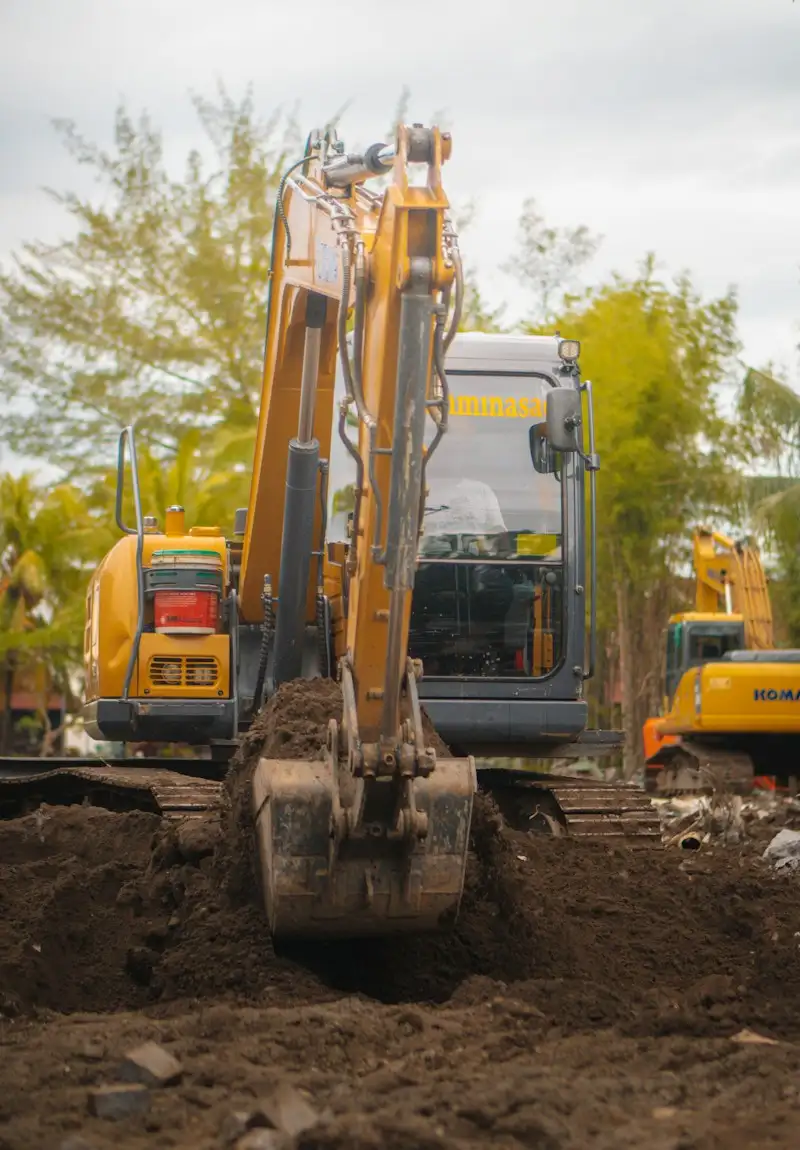
Additions, garages and pools
Smaller projects need the same care. An addition means digging next to a house that's already standing, often with limited access and a septic system or utilities nearby. We plan the dig, protect what's there, and keep the mess contained. We also dig for detached garages, sheds, pool installations and pool removals.
Foundations and frost depth
Footings in Connecticut need to sit below the frost line so the ground doesn't heave them in winter. The Connecticut State Building Code uses a frost depth of 42 inches, and that number applies to unheated garages too. Your plans set the actual depth. We dig to them and keep the bottom of the excavation clean and undisturbed for the footing crew.
Grading that keeps water out
The last grade around a new house matters as much as the first dig. The ground should fall away from the foundation on all sides so roof water and runoff don't end up in the basement. The residential building code calls for a fall of at least 6 inches within the first 10 feet where the lot allows it. We finish every job with that in mind. More on that in our page on grading and drainage.
Common questions
Can you do the whole site, including septic and driveway?
Yes. One crew handling clearing, foundation, utilities, septic, backfill and grading keeps the schedule tighter and avoids finger-pointing between subs.
Do I need a permit for foundation excavation?
The excavation is part of your building permit. If the lot has wetlands or watercourses nearby, you may also need an inland wetlands permit. We'll tell you what to check with your town.
Can you dig an addition with tight access?
Usually. We match the machine to the space and plan how to get in and out without damaging the house, driveway or septic system.
Do you take small residential jobs?
Yes. A single trench, a short driveway extension or one stump is worth a call.