Grading
Rough grading shapes the site to the elevations on the plans: building pad, driveway, septic area and yard. Finish grading sets the final surface with topsoil, ready for seed, sod or landscaping. Both matter because water follows the ground. Get the grade wrong and it ends up against the house or across the driveway.
Around a foundation, the ground should fall away on every side. The residential building code calls for at least 6 inches of fall within the first 10 feet where the lot allows. On tight lots where that isn't possible, swales or drains carry water away instead.
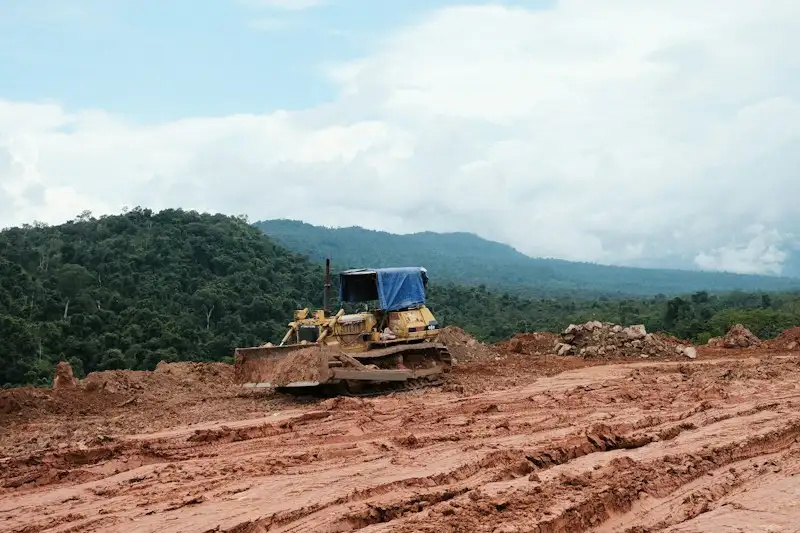
Drainage fixes
Most drainage problems come from a few sources: roof water dumped at the foundation, ground that slopes toward the house, water coming downhill from a neighbor or the road, or soil that doesn't drain. Depending on the cause, the fix might be:
- Regrading so the yard pitches away from the house
- Downspout drains that carry roof water underground to daylight or a drywell
- Swales: shallow, grassed channels that steer surface water around the house
- French drains and curtain drains to intercept groundwater and seepage
- Drywells where there's no good place to daylight the water
- Driveway drainage, like trench drains, culverts and re-pitching
We explain how to figure out which one you need in Fixing yard drainage problems in Connecticut.
Connecticut ground makes it interesting
A lot of Connecticut sits on shallow ledge, glacial till and hardpan, which don't drain the way sandy soil does. Spring snowmelt and heavy rains bring the water table up. That's why the right fix here is often about steering water around the problem area rather than hoping it soaks in. We look at where the water is coming from before we recommend anything.
A good drainage fix moves water somewhere it can go safely. It shouldn't dump on the next property, the street, or your own septic field. Roof drains and sump discharge should be kept away from the leach field.
Common questions
Why is my basement wet after heavy rain?
Most often, roof water from downspouts is soaking the ground right at the foundation, or the yard slopes toward the house. Fixing gutters, extending downspouts underground and regrading solve a lot of wet basements without touching the foundation.
What's the difference between a French drain and a swale?
A swale is a shallow channel on the surface that steers runoff. A French drain is a gravel-filled trench with a perforated pipe that collects water underground. Many yards need one or both.
Can you fix a soggy yard?
Usually. We first find out whether the water is coming from the surface, from groundwater, or from poorly draining soil. The fix depends on the cause.
Do drainage projects need a permit?
Small residential drainage work often doesn't, but work near wetlands or watercourses, or anything that changes where water leaves your property, may. We'll tell you what to check with your town.