What land clearing covers
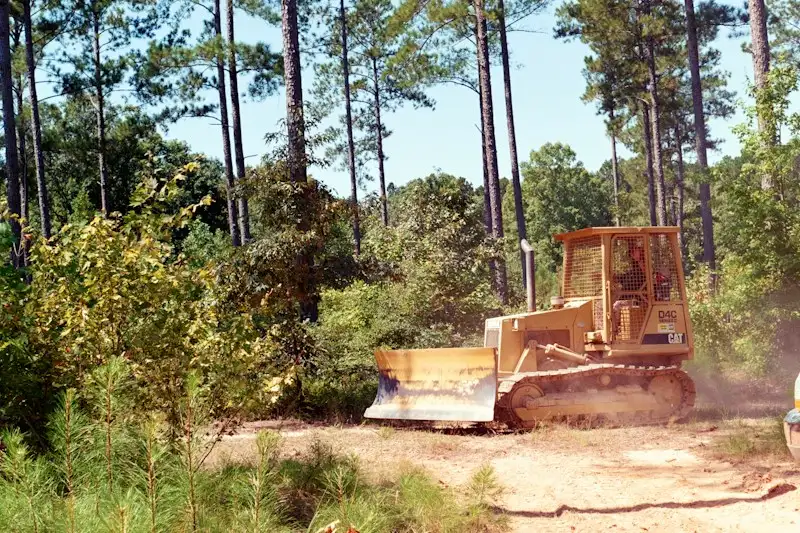
- Tree removal within the area to be cleared
- Brush and undergrowth cleared and hauled or processed
- Stump grubbing: pulling stumps and roots so the ground can be built on
- Rock and boulder removal, which on many Connecticut lots is a big part of the job
- Topsoil stripping and stockpiling for reuse when grading is done
- Erosion controls installed before the ground is opened
We clear for new house lots, driveways, septic areas, additions, fields and pastures, views, and commercial sites.
Check wetlands rules before you clear
This is the part people get burned on. In Connecticut, every town has an inland wetlands commission, and clearing near wetlands or watercourses often needs a permit even if you're not building anything. Each town sets its own upland review area. For example, Brookfield's commission requires a permit for work within 75 feet of a wetland and 100 feet of a watercourse, and it lists clearing trees as a regulated activity. Your town's numbers may be different.
Before we clear, we'll ask whether there are wetlands, streams or ponds on or near the property, and we'll recommend a call to your town's wetlands agent if there's any doubt. Our guide Before you clear a wooded lot in Connecticut goes through the permits and planning step by step.
How we keep it clean
- We flag the limits of clearing with you before the first tree comes down.
- Silt fence and a stone construction entrance go in first, so mud stays on site.
- We protect trees you want to keep, including their root zones.
- Topsoil is saved for the end of the job rather than hauled away.
What drives the cost
We price clearing after we walk the land, because a few things change the number a lot: how dense and large the trees are, how many stumps and how much rock there is, slope and access, whether wood and brush are hauled or processed on site, and the erosion controls the town requires. We'll explain each piece in the estimate.
Common questions
Do I need a permit to clear trees on my own land in Connecticut?
Sometimes. If the clearing is within your town's upland review area around wetlands or watercourses, an inland wetlands permit is often required. Clearing for a new house is usually covered by the approvals for that project. Check with your town's wetlands or land use office.
Do you remove stumps too?
Yes. Stump grubbing is part of clearing for anything that will be built on, because stumps and roots left in the ground rot and settle.
What happens to the trees and brush?
Depending on the job, wood can be cut and left for you, hauled away, or processed. We'll go over the options during the estimate.
Can you clear just part of a lot?
Yes. We flag the area with you before we start and leave everything outside it alone.