Clearing land looks simple: trees come down, stumps come out, the ground gets leveled. In Connecticut, the part that takes planning happens before any of that. Town wetlands rules, erosion control and what's actually under the trees all shape the job.
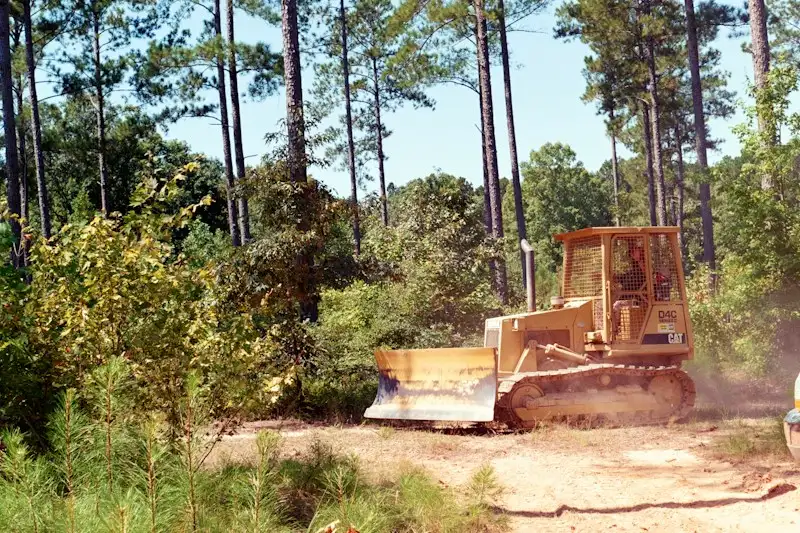
1. Find out if there are wetlands nearby
Connecticut protects inland wetlands and watercourses through local inland wetlands commissions in every town. Wetlands aren't just obvious swamps. They're defined largely by soil type, so a damp corner of a wooded lot, a seasonal stream or the edge of a pond can all count.
Most towns also regulate an upland review area: a buffer around wetlands and watercourses where activities need a permit. Each town sets its own distances. For example, the Brookfield Inland Wetlands Commission requires a permit for work within 75 feet of a wetland, 100 feet of most watercourses, and 200 feet of certain lakes and rivers, and it specifically lists clearing trees as an activity that needs one.
Call your town's wetlands agent or land use office before clearing. Tell them where the property is and what you want to clear. They can check maps and tell you whether a permit is needed. It's much cheaper than a cease-and-desist order and a restoration plan.
2. Plan erosion and sediment control
Once trees and roots are gone, bare soil washes away fast in a Connecticut downpour. Mud in the street, a neighbor's yard or a stream is exactly what towns and the state are watching for. The standard tools come from the Connecticut Guidelines for Soil Erosion and Sediment Control:
- Silt fence or other barriers on the downhill side of the work
- A stone construction entrance so trucks don't track mud onto the road
- Keeping disturbed areas small and stabilizing them quickly with seed and mulch
- Protecting nearby catch basins and streams
On our jobs these go in before the first tree comes down.
3. Know when the state gets involved
For bigger projects, Connecticut DEEP's construction stormwater general permit applies to activities that disturb one acre or more. Depending on the size of the project and whether the town reviews it, that can mean registering with DEEP, a Stormwater Pollution Control Plan from a qualified professional, and regular inspections. Clearing a typical house lot usually stays under this threshold, but a large clearing for a field, a subdivision or a commercial site can cross it.
4. Decide exactly what's being cleared
Walk the property with your contractor and flag:
- The limits of clearing, including the house, driveway, septic area and yard
- Trees you want to keep, with enough room around them to protect their roots
- Property lines, so nothing on the neighbor's side gets touched
- Wells, existing septic, and any buried lines
Clear-cutting more than you need costs more, removes shade and screening you may miss, and opens more bare soil to erosion.
5. Stumps, rock and what's underground
Clearing for anything that will be built on means pulling stumps and roots, which rot and settle if left. That's called grubbing. In much of Connecticut, the bigger surprise is rock: stone walls, boulders from the glaciers, and shallow ledge. Ledge can change where a house or septic system can go, so soil testing and test pits early in the process are worth it.
6. What happens to the wood and brush
Options usually include cutting firewood-length logs and leaving them for you, hauling everything away, or processing brush on site. Each has a different cost. Ask for it to be spelled out in the estimate.
What drives the cost of land clearing
- Area to be cleared, and tree size and density
- Number and size of stumps, and how much rock there is
- Slope, wet ground and access for equipment
- Hauling and disposal versus leaving wood on site
- Erosion controls and any permit conditions
- Saving and stockpiling topsoil for later grading
If you're planning to clear land anywhere in Connecticut, we'll walk it with you, flag the limits, and tell you what to check with the town before we start. More on our land clearing services.
Terwilliger Construction is a family-owned site contractor in Bristol, Connecticut, started by Mike Terwilliger in 1976 and run today by his sons. Read our story.